

The scent of citrus zest mixed with sweet, yeasty dough filling the kitchen? That’s Italian Easter Bread in the making—and it’s always worth the wait. After testing this recipe four times (once with overproofed dough, and once with a last-minute butter substitution), I’ve landed on the exact method that creates an ultra-soft, pillowy crumb with just the right amount of springy structure. The wreath shape is not just for show—it cradles those festive, dyed eggs in the loveliest way. This is a delicious nod to tradition, and it pairs beautifully with other spring holiday bakes like Bird’s Nest Cookies.
About Italian Easter Bread
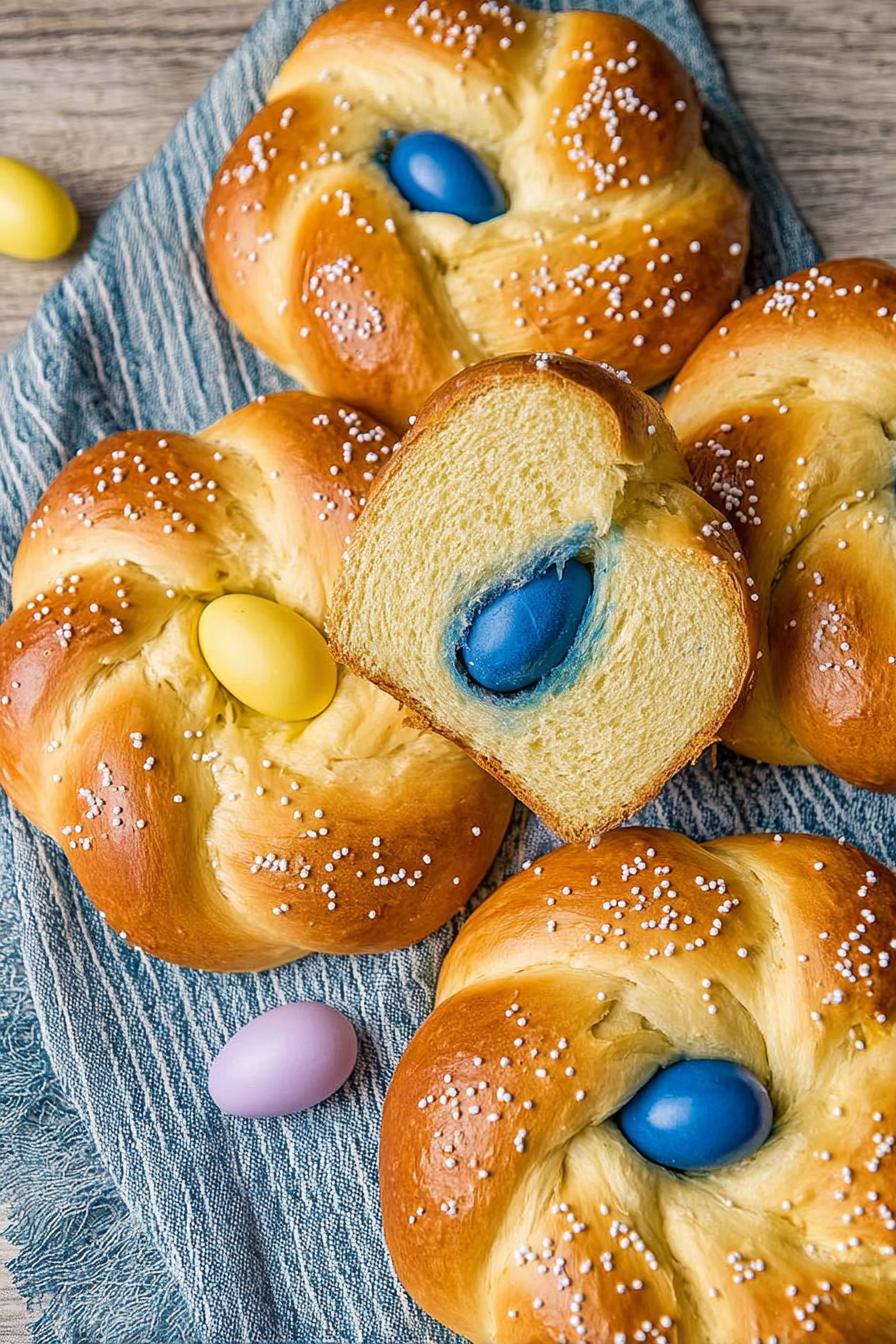
Italian Easter Bread isn’t just a recipe—it’s a celebration of springtime and family. This slightly sweet, enriched bread is braided into beautiful wreaths and baked with dyed eggs nestled in the center. I’ve tested this version for both texture and flavor—adjusting rest times, dough hydration, and even oven rack positions for an even golden finish. Here’s why it earns a spot at your table year after year:
- Kid-friendly fun with decorating and dyeing eggs
- Budget-friendly pantry ingredients
- Great for gifting or festive brunch spreads
- Symbolic shape and color: the wreath and eggs represent rebirth and renewal
Key Ingredients & Their Roles
- Whole Milk: Keeps the dough rich and moist — use almond milk for a dairy-free version (though slightly less fluffy)
- Active Dry Yeast: Essential for that signature airy rise — be sure it’s foamy before adding flour
- Lemon & Orange Zest: Adds lightness and spring flavor — don’t skip these
- Dyed Uncooked Eggs: Traditional and beautiful — just wash them well beforehand
How to Make Italian Easter Bread
- Make the sponge: Dissolve yeast in warm milk and let it bloom for 5–10 minutes. Add sugar, eggs, and flour — stir until it’s thick like pancake batter. Cover and let sit in a warm spot for 30 minutes until bubbly.
- Make the dough: To the sponge, add more flour, sugar, diced butter, salt, vanilla, and citrus zest. Use the dough hook to knead — 1 minute low, 7 minutes medium — until smooth and elastic. It should pull away from the sides of the bowl.
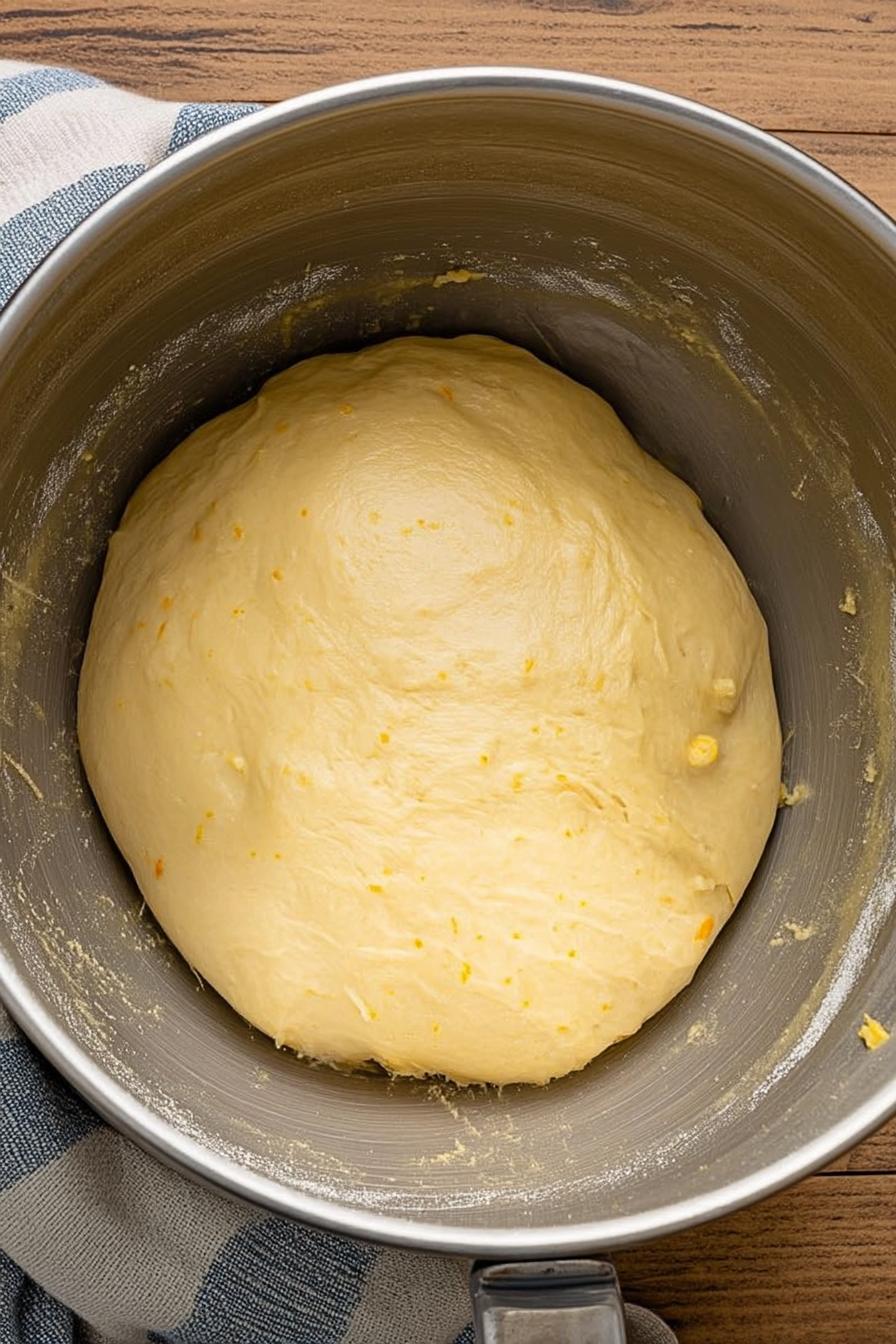
- First rise: Cover and let the dough rise for 1 1/2 hours, or until doubled in size. It should feel puffy but resilient when pressed.
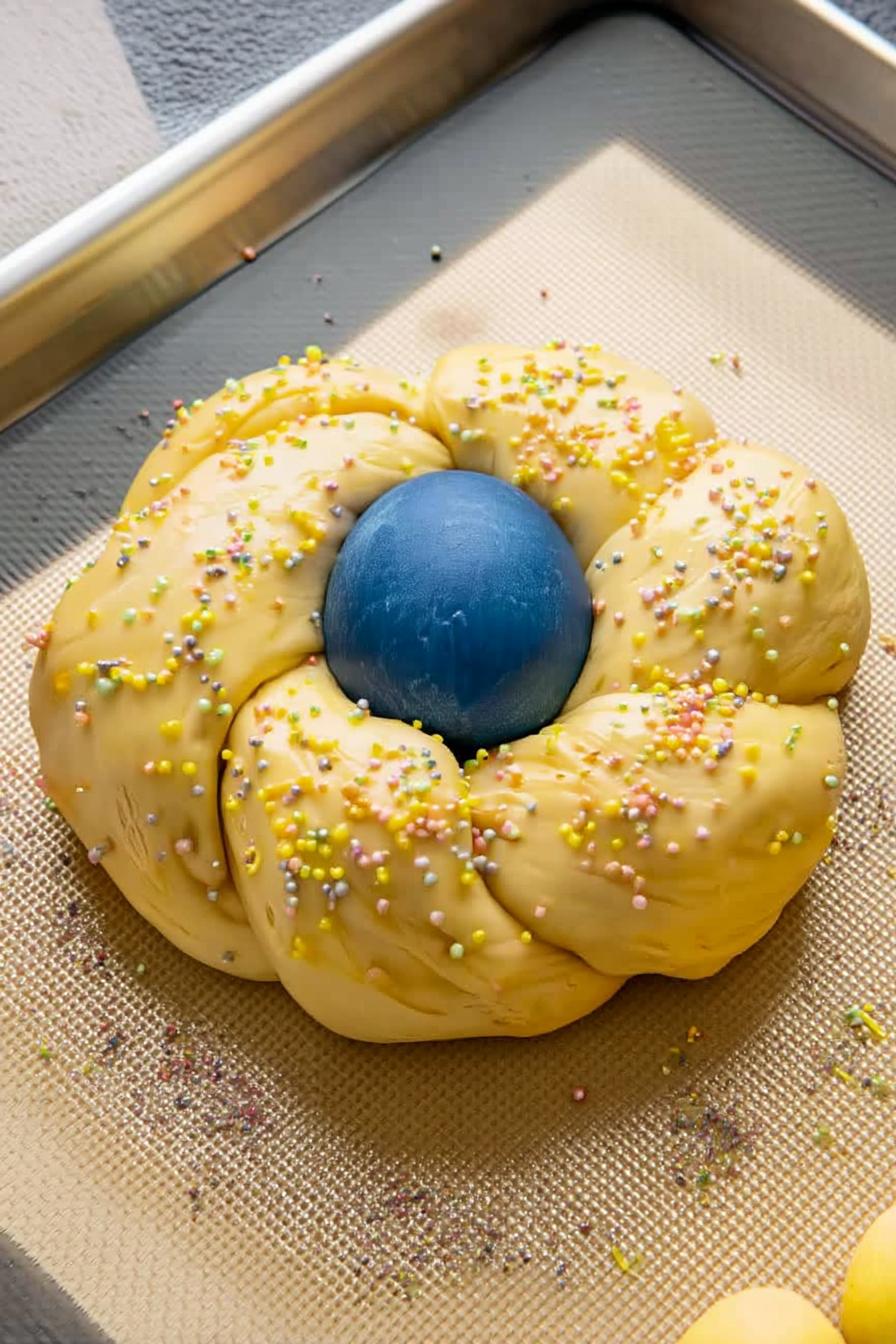
- Divide and shape: Punch down, then portion into 8 equal pieces (about 120 g). Roll each into a rope, twist two together, form a wreath, and tuck ends underneath. Repeat to make 4 wreaths.
- Second rise: Place on lined baking sheets, cover, and proof another hour — they should be puffy and supple, not flat.
- Prep oven to 400°F. Gently place one dyed raw egg into the center of each wreath. Whisk egg with milk and brush around the dough only. Add sprinkles if using.
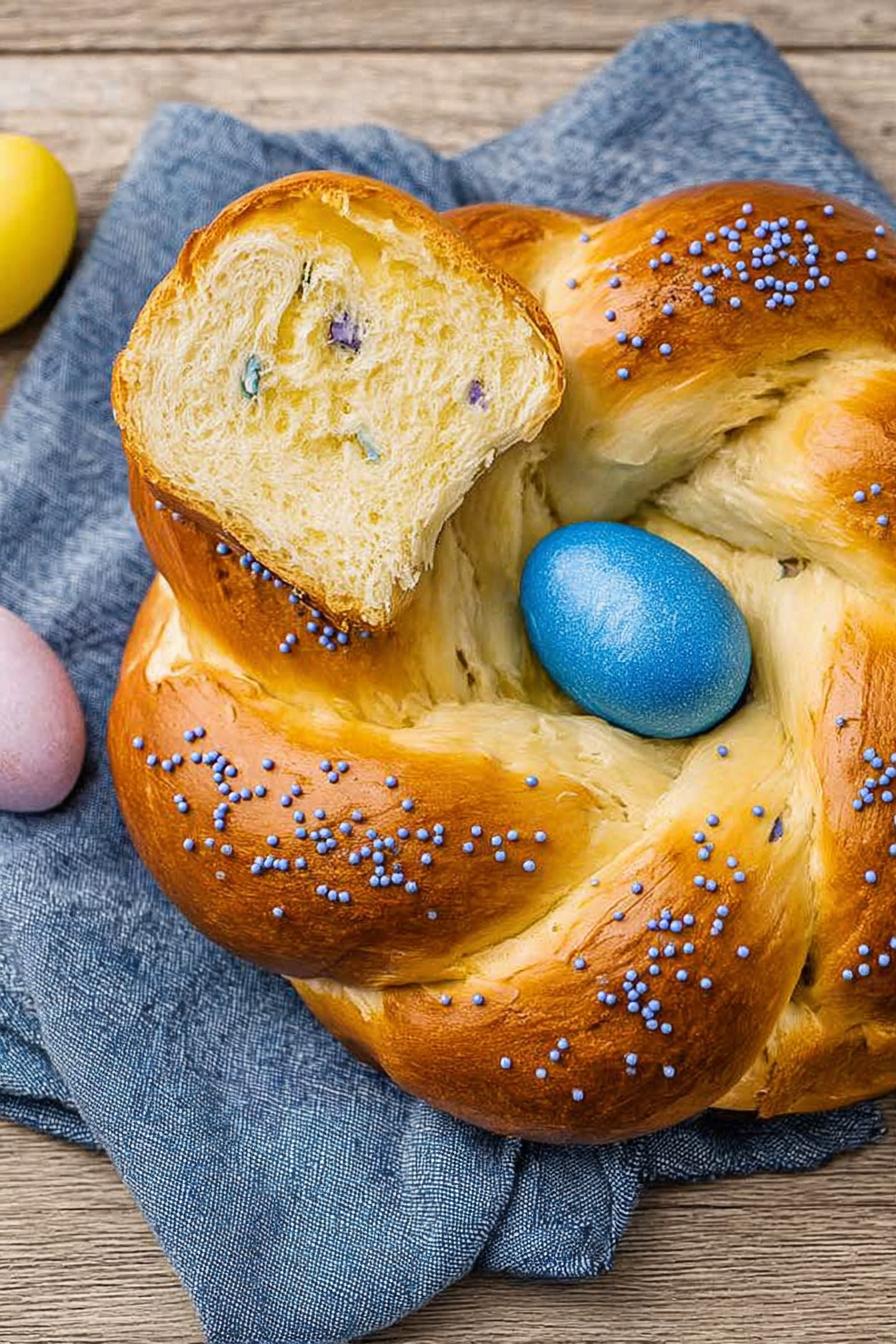
- Bake for 20 minutes, swapping trays halfway through, until deeply golden. The loaves should sound slightly hollow when tapped.
- Cool completely on a wire rack before slicing or gifting.
Pro Tips & Troubleshooting
- If your dough feels too sticky during kneading, don’t rush — it tightens up with time. I added 1 tablespoon more flour on a humid day.
- Don’t skip rotating the pans halfway during baking — one of mine browned unevenly before I made this a habit.
- For a cozy twist, try subbing almond extract for vanilla and top with sliced almonds instead of sprinkles.
- This recipe scales beautifully — you can easily halve it or double for a crowd. Just measure your portions carefully.
Storage & Make-Ahead Guide
Store Italian Easter Bread at room temperature in an airtight container for up to 3 days. For longer storage, freeze the cooled loaves (without dyed eggs) for up to 2 months. Thaw overnight at room temp and warm in a 300°F oven for 8–10 minutes. I froze one wreath fully baked and reheated it two weeks later—it was still fluffy and tender.
What to Serve With Italian Easter Bread
This bread shines on a brunch table alongside Avocado Toast or served with a spring salad like Watermelon Feta Salad. Add coffee or tea for a sweet afternoon bite, or even a slather of whipped ricotta.
Frequently Asked Questions
- Can I use instant yeast instead of active dry yeast? Yes! Use the same amount and skip the proofing step — just mix straight in with the flour.
- Are the dyed eggs safe to eat after baking? If they were handled and stored safely beforehand, yes. Be sure they don’t crack in the oven.
- Why didn’t my dough rise properly? Check your yeast freshness and water temperature — anything too hot will kill the yeast before rising.
- Can I make this recipe ahead of time? Yes, shape the dough wreaths and refrigerate overnight. Let sit at room temp 1 hour before baking.
- What happens if the dyed eggs crack in the oven? It’s not ideal but still usable — just be sure they’re cooked through and refrigerate leftovers promptly.
Final Thoughts
Italian Easter Bread has earned its place in my spring baking rotation—not just because it’s beautiful, but because it feels like a celebration every time I make it. I love tearing off a warm piece in the morning with coffee, or wrapping one up as a holiday gift. Try this version and let it become part of your own family tradition—tag me when you share what you bake!
More Recipes You’ll Love
- Easter Cake Pops – a colorful and festive addition to your Easter table
- Focaccia – another delightful Italian bread experience
- Dandelion Bread – a unique, floral twist on traditional bread

Italian Easter Bread
Ingredients
Main Ingredients
- 1 cup whole milk lukewarm
- 2.25 teaspoons active dry yeast
- 1/4 cup granulated sugar
- 2 large eggs at room temperature
Dough Ingredients
- 4 cups all-purpose flour
- 1/4 cup granulated sugar
- 1/4 cup unsalted butter
- 1 teaspoon kosher salt
- 1 teaspoon vanilla extract
- 1 lemon zest of
- 1 orange zest of
Decoration
- 4 dyed eggs uncooked
- 1 large egg
- 1 tablespoon milk
- Multicolored nonpareils or sprinkles
Instructions
First Steps
- In the bowl of a stand mixer, dissolve the yeast in the milk and let stand until it begins to foam, 5 to 10 minutes. Add the sugar, eggs, and flour, and stir with a rubber spatula to combine.1 cup whole milk, 2.25 teaspoons active dry yeast, 1/4 cup granulated sugar, 2 large eggs
Make the Dough
- To the sponge, add the flour, sugar, butter, salt, vanilla, and zest. Fit the mixer with the dough hook and mix until the dough comes together into a rough ball.
Rising and Shaping
- Cover the bowl and let it rise for 1 1/2 hours. Punch down and divide into 8 portions, then shape into wreaths.
- Let it rise again and prepare the oven to 400°F.
Baking
- Nestle a dyed egg in each loaf, apply egg wash, and sprinkle with nonpareils. Bake for 20 minutes.
- Transfer to a wire rack and cool completely before serving.