
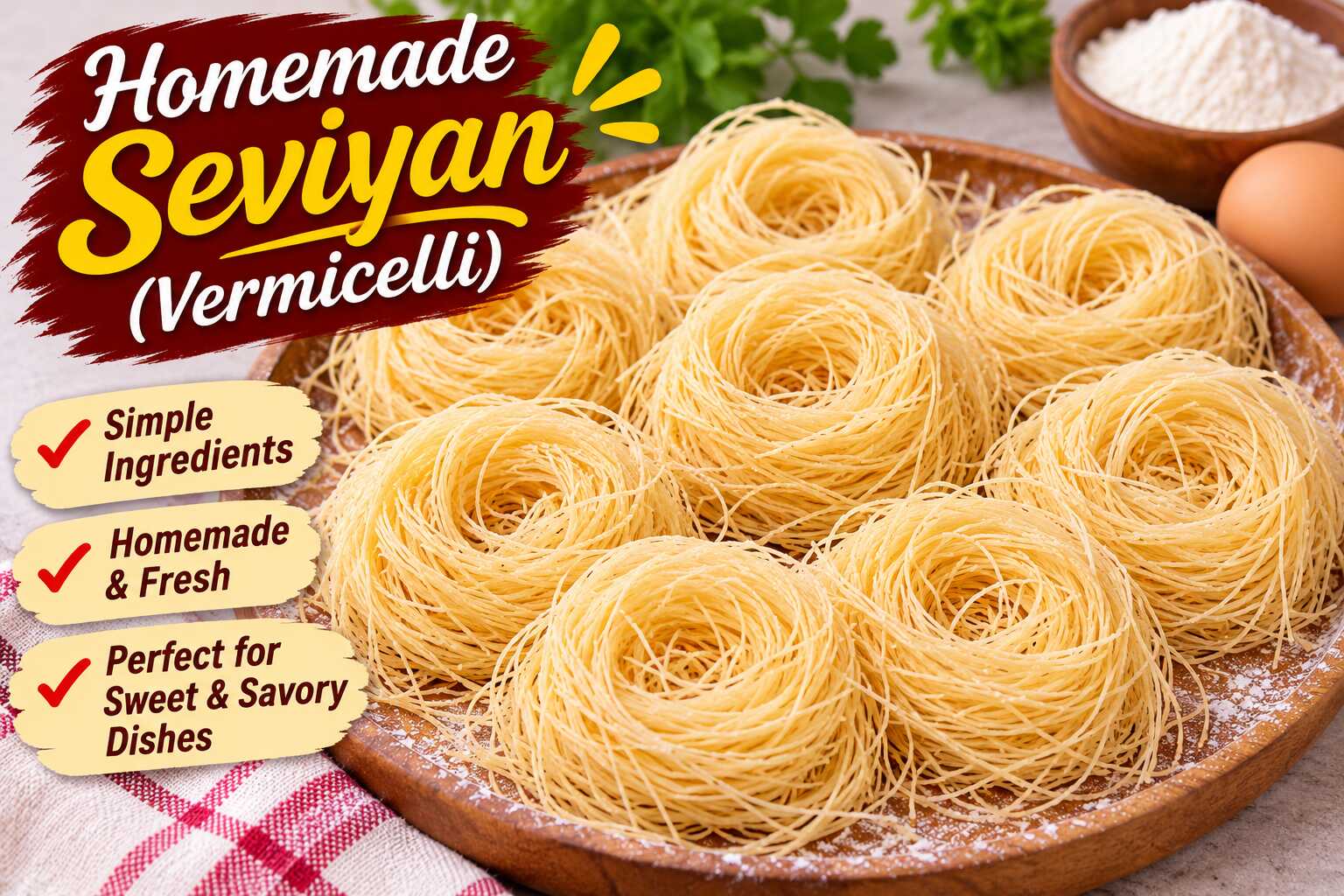
Have you ever wanted to make your own homemade seviyan from scratch? This Homemade Seviyan (Vermicelli) recipe shows you how to turn simple pantry ingredients into delicate, thin strands of homemade vermicelli that you can dry, store, and use in your favorite dishes.
Made with all-purpose flour, egg, cornstarch, salt, oil, and water, this homemade vermicelli dough is simple to prepare. Once the dough is kneaded and rested, it is rolled into very thin sheets, cut into fine strands, and arranged into small nests before drying completely.
Homemade seviyan is a wonderful ingredient to keep in your kitchen. You can use it to prepare traditional sweet dishes like milk seviyan, or add it to savory recipes depending on how you like to cook it.
Although cutting the dough into thin strands takes a little patience, the process is straightforward and requires only basic kitchen tools. Follow the steps below to make your own fresh homemade vermicelli!
Why You’ll Love This Homemade Seviyan Recipe
- Simple ingredients: Made with everyday pantry staples, including flour, egg, oil, and water.
- Made completely from scratch: Prepare your own vermicelli without relying on store-bought varieties.
- Versatile: Use it in sweet milk-based desserts or savory vermicelli dishes.
- Customizable thickness: Cut the dough into thin strands according to your preference.
- Convenient to prepare ahead: Dry the vermicelli completely and store it for later use.
- No special machine required: A rolling pin and a sharp knife are enough to make this recipe.
Ingredients You’ll Need
You only need a few basic ingredients to prepare homemade seviyan.
- All-purpose flour (2 cups): The main ingredient that gives the vermicelli its structure.
- Large egg (1): Helps bind the dough together and contributes to its texture.
- Salt (½ teaspoon): Adds a little flavor to the dough.
- Cornstarch (1 tablespoon): Helps adjust the texture of the dough and makes the strands easier to handle.
- Oil (1 tablespoon): Adds a little flexibility and richness to the dough.
- Water (½ cup, or as needed): Helps bring the ingredients together into a smooth, firm dough. Add it gradually because the amount needed can vary.
- Extra flour: Used for dusting the work surface and preventing the dough sheets and strands from sticking.
How to Make Homemade Seviyan (Vermicelli)
Follow these simple steps to prepare thin, delicate homemade vermicelli strands from scratch.
Step 1: Mix the Dry Ingredients
In a large mixing bowl, combine the all-purpose flour, cornstarch, and salt.
Mix well with a spoon or whisk until the dry ingredients are evenly distributed.
This creates the base for your homemade vermicelli dough.
Step 2: Add the Egg and Oil
Add the large egg and tablespoon of oil to the flour mixture.
Mix everything together until the egg is incorporated and the mixture starts to look crumbly.
Make sure the egg is evenly distributed before adding the water.
Step 3: Add Water and Knead the Dough
Gradually add the water while mixing the ingredients.
Continue adding water a little at a time until the flour comes together into a smooth, firm dough.
Knead until the dough becomes cohesive and smooth. Avoid adding all the water at once because the amount needed may vary depending on the flour.
Step 4: Let the Dough Rest
Shape the dough into a ball and place it in a bowl.
Cover with a clean kitchen towel or plastic wrap and let it rest for approximately 20–30 minutes.
This resting period allows the dough to relax, making it easier to roll into thin sheets.
Step 5: Divide and Roll the Dough
Divide the rested dough into several manageable portions.
Lightly dust your work surface and rolling pin with flour.
Take one portion at a time and roll it into a very thin, even sheet.
Try to keep the thickness consistent so the vermicelli strands dry evenly.
Repeat with the remaining portions, lightly dusting the sheets with flour to prevent them from sticking together.
Step 6: Cut Into Thin Strips
Once the dough sheets are ready, carefully stack them with a light dusting of flour between the layers to prevent sticking.
Using a sharp knife, cut the stacked sheets into very thin, long strips.
Try to keep the strands as uniform as possible. Thinner strands will produce a delicate vermicelli texture, while thicker strands will take longer to dry.
Step 7: Separate and Arrange the Vermicelli
Gently separate the freshly cut strands using your fingers.
Carefully arrange them into small, loose nests on a clean, lightly floured tray.
Avoid packing the strands tightly together because they need enough air circulation to dry properly.
Repeat until all the dough has been cut and arranged.
Step 8: Dry Completely Before Storing
Leave the homemade seviyan to dry completely in a clean, dry, well-ventilated area.
Make sure the strands are fully dry before transferring them to a storage container. The drying time will depend on the thickness of the vermicelli and the humidity in your kitchen.
Once completely dry, store the vermicelli in a clean, airtight container in a cool, dry place.
Your homemade seviyan is now ready to be used in your favorite recipes!
Tips for Making the Best Homemade Vermicelli
Keep these helpful tips in mind to get evenly cut strands and a good homemade vermicelli texture.
1. Add Water Gradually
Don’t pour all the water into the flour at once. Add it gradually until the dough becomes smooth and firm. Too much water can make the dough sticky and difficult to roll.
2. Let the Dough Rest
Allowing the dough to rest for 20–30 minutes makes it easier to roll into thin sheets without excessive shrinking or resistance.
3. Roll the Sheets Thinly
The thickness of the dough sheets affects the final vermicelli texture. Roll them as thinly and evenly as possible for delicate strands.
4. Dust Between the Layers
Lightly dust the sheets with flour before stacking them. This helps prevent them from sticking together when you cut them into strips.
5. Use a Sharp Knife
A sharp knife helps create clean, even strands. Try to cut the strips to a similar thickness so they dry consistently.
6. Separate the Strands Gently
After cutting, gently loosen the strands with your fingers. Avoid pulling too hard, as this can break the delicate vermicelli.
7. Make Sure the Vermicelli Is Completely Dry
Don’t store the strands while they still feel soft or damp. Complete drying is essential before transferring them to an airtight container.
How to Use Homemade Seviyan
Homemade vermicelli is a versatile ingredient that can be used in many delicious recipes.
- Sweet milk seviyan: Cook the vermicelli in milk with sugar, cardamom, and nuts for a comforting dessert.
- Sheer Khurma: Use homemade vermicelli in this traditional festive milk-based dessert.
- Sweet vermicelli pudding: Combine cooked seviyan with milk, sugar, and your favorite toppings.
- Savory vermicelli: Prepare a savory dish with vegetables and your preferred seasonings.
- Vermicelli breakfast: Add cooked vermicelli to a simple breakfast preparation with milk or other ingredients.
Remember that cooking time will depend on the thickness and dryness of your homemade vermicelli.
How to Store Homemade Seviyan
Proper drying and storage help maintain the quality of your homemade vermicelli.
Before storing: Make sure the strands are completely dry. There should be no damp or soft sections remaining.
At room temperature: Once fully dried, place the vermicelli in a clean, completely dry, airtight container. Keep it in a cool, dry location away from moisture and direct sunlight.
For longer storage: If you are unsure whether the vermicelli is completely dry, avoid storing it at room temperature. Refrigeration or freezing is a more cautious option, using an airtight, freezer-safe container.
Before cooking: Check the stored vermicelli for any signs of moisture, unusual odors, or spoilage before using it.
Frequently Asked Questions
What is homemade seviyan made of?
Homemade seviyan is made using all-purpose flour, egg, salt, cornstarch, oil, and water. These ingredients are combined into a firm dough, rolled into thin sheets, and cut into delicate strands.
Can I make seviyan without a vermicelli machine?
Yes! This recipe uses a rolling pin and a sharp knife instead of a vermicelli machine. Simply roll the dough into thin sheets and cut them into narrow strips by hand.
Why is my vermicelli dough difficult to roll?
The dough may be too dry or may not have rested long enough. Add water gradually when preparing the dough and allow it to rest for 20–30 minutes before rolling.
How thin should I roll the dough?
Roll the dough into very thin, even sheets. The thinner the sheets, the finer the finished vermicelli strands will be.
Why do my vermicelli strands stick together?
This can happen if the dough sheets are too moist or are stacked without enough flour between them. Lightly dust the sheets before stacking and gently separate the strands after cutting.
How long does homemade seviyan take to dry?
The drying time depends on the thickness of the strands, room temperature, and humidity. There is no fixed drying time for every kitchen. Allow the vermicelli to dry completely before storing or cooking.
Can I use homemade seviyan for sweet recipes?
Absolutely! Homemade seviyan can be used in milk-based desserts, sheer khurma, vermicelli pudding, and other sweet dishes.
Can I use homemade seviyan in savory recipes?
Yes. You can also use it in savory vermicelli dishes with vegetables and seasonings. Adjust the cooking time according to the thickness of the strands.
Final Thoughts
Making Homemade Seviyan from scratch is a wonderful way to prepare a useful kitchen staple with simple ingredients.
With a smooth, firm dough, thinly rolled sheets, and carefully cut strands, you can create delicate homemade vermicelli without needing special equipment.
Prepare a batch, allow it to dry completely, and keep it ready for your favorite sweet or savory dishes. Once you try making your own seviyan, you may find yourself reaching for this simple homemade recipe whenever you need fresh vermicelli!

Homemade Seviyan (Vermicelli)
Ingredients
- 2 cups all-purpose flour maida
- 1 large egg
- 1/2 teaspoon salt
- 1 tablespoon cornstarch
- 1 tablespoon oil
- 1/2 cup water or as needed
- Extra flour for dusting
Instructions
- In a bowl, mix the all-purpose flour, cornstarch, and salt.
- Add the egg and oil, then mix well.
- Gradually add water and knead into a smooth, firm dough.
- Cover and let the dough rest for 20-30 minutes.
- Divide the dough into portions and roll each portion into very thin sheets, dusting lightly with flour.
- Stack the sheets and cut them into very thin, long strips.
- Gently separate the strips and arrange them into loose nests.
- Let the homemade seviyan dry completely before storing or cooking
Notes
Allow the dough to rest before rolling.
Roll the sheets as thinly and evenly as possible.
Dust lightly with flour between stacked sheets to prevent sticking.
Use a sharp knife to cut uniform vermicelli strands.
Separate the strands gently after cutting.
Dry the vermicelli completely before storing.
Drying time depends on strand thickness and humidity.